The Technical Mastery Behind Modern Curtain Fabrics: Performance, Craftsmanship, and Custom Innovation
Dec 20, 2025
Curtains are the unsung heroes of architectural interiors. They are dynamic interfaces between occupants and their environment, tasked with modulating light, ensuring privacy, conserving energy, and contributing profoundly to acoustic and aesthetic comfort. Moving beyond basic commodity textiles, today's high-performance curtain fabrics are feats of textile engineering. For contract projects, hospitality giants, and premium residential brands, understanding this technical landscape is essential. Zhejiang JIERSHENG Textile Technology Co., Ltd., with its robust infrastructure of full production and testing lines and a specialized technical team, operates at the forefront of this technical frontier. This article delves into the science, standards, and custom manufacturing processes that define excellence in the contemporary curtain fabric industry.
Engineering Light and Climate: The Physics of Functional Fabrics
The primary technical functions of a curtain fabric revolve around environmental control. Each property is a direct result of specific material choices and construction techniques.
Mastering Light Control: The spectrum ranges from sheer, light-diffusing fabrics to total blackout. Light-filtering options, often using fine plain fabrics or airy linens, softly diffuse sunlight, reducing glare while maintaining a connection to the outdoors. Room-darkening fabrics, typically medium-weight jacquards or printed fabrics with a tight weave and possibly a light coating, significantly reduce light penetration. True blackout performance, a non-negotiable for hotels and home theaters, is achieved through a multi-layer construction. A dense face fabric (like a heavy velvet or suede) is laminated to an opaque, often foam-backed, core that absorbs and reflects light. JIERSHENG's capability to produce and test these complex laminations ensures consistent, gap-free darkness.
Thermal Insulation and Energy Efficiency: Curtains act as a thermal buffer. The insulating power is determined by fabric density, weight, and structure. Heavyweight chenille, velvet, and multi-layer quilting fabrics create pockets of still air, dramatically reducing heat transfer through windows. This not only enhances occupant comfort but also lowers HVAC energy consumption-a key consideration for sustainable building projects and cost-conscious operations.
Acoustic Modulation and Sound Absorption: In open-plan spaces, offices, and restaurants, noise control is critical. Soft, thick, and porous fabrics are excellent sound absorbers. Velvet, with its dense pile, and specially engineered acoustic textiles can significantly reduce reverberation time and ambient noise levels, contributing to speech clarity and overall sonic comfort.
Durability and Safety: Meeting International Standards: Contract fabrics must withstand rigorous use. Key tests include abrasion resistance (Martindale or Wyzenbeek tests), colorfastness to light and rubbing, and dimensional stability. Furthermore, fire retardancy (FR) is a paramount safety requirement for public spaces. Fabrics can be constructed using inherently FR fibers or treated with FR finishes post-weaving. A manufacturer's in-house testing lab, like the one at JIERSHENG, is crucial for certifying that every batch meets the specific FR standards of North America (NFPA, CA TB 117), Europe, or other target markets.
The Artisanal Edge: Decorative Techniques with Technical Demands
While performance is key, aesthetics drive selection. Several decorative techniques demand precise technical execution to achieve their visual impact without compromising function.
Structural Complexity: Jacquard Weaves. A jacquard fabric is not merely a pattern; it is an integral, three-dimensional structure. The jacquard loom individually controls thousands of warp threads, allowing for intricate, large-scale designs woven directly into the cloth. This results in exceptional durability, as the pattern cannot peel or fade, and a luxurious weight. The skill lies in programming the loom and selecting yarns so that the design remains crisp and the fabric retains an excellent drape-a core competency of a seasoned technical team.
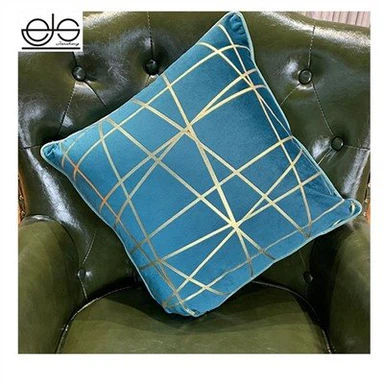
Surface Embellishment: Embroidery, Embossing, and Bronzing. These techniques add luxury and detail. Embroidery fabric requires precision machinery to stitch complex patterns onto a base cloth without causing puckering or compromising the fabric's hand. Embossed fabric uses heated rollers to press a permanent, textured pattern (like leather grain or geometric designs) into the fabric, often enhancing the material's light-catching properties. Bronzing fabric involves heat-transferring metallic foil onto specific areas of the print. The technical challenge is ensuring superior foil adhesion and wash durability, which depends on precise temperature, pressure, and adhesive control during application.
Innovative Texture: Crushed and Ultrasound Techniques. Crushed fabric is mechanically twisted or pressed to create a permanent, irregular textured effect with a luxurious, changeant luster. This process must be carefully calibrated to achieve the desired visual effect without weakening the yarn. Ultrasound fabric bonding uses high-frequency sound waves to fuse layers together or create quilted patterns without thread. This creates a clean, modern aesthetic, eliminates needle holes (enhancing blackout or insulation), and allows for intricate, sealed designs that are hygienic and easy to clean.
The Customization Pipeline: From Client Sample to Bulk Perfection
The true mark of a advanced manufacturer is the ability to reliably replicate and scale a custom design. The process is a waterfall of technical checkpoints.
Design Analysis and Technical Translation: It starts with a client's sample or design brief. JIERSHENG's 35 technicians analyze the sample's composition, weave structure, weight, and finish. They reverse-engineer the specifications and create a "recipe" for production, identifying the needed yarns, loom type, and finishing processes. This phase often involves creating a small lab sample for client approval.
Vertical Production with Integrated Quality Gates: With full production equipment, every stage is controlled in-house.
Weaving: The design is loaded onto the appropriate loom-jacquard for complex patterns, velvet for plush piles, needle looms for suede.
Dyeing & Printing: Colors are matched to international standards (e.g., Pantone, RAL) using computerized systems for batch-to-batch consistency. For printed fabric, rotary or digital printers apply designs with precise alignment.
Finishing: The fabric undergoes treatments: coating for blackout, embossing for texture, washing for softness, or applying FR/ stain-resistant finishes.
In-House Validation and Certification: Before shipment, the finished batch is subjected to rigorous tests on the "full testing equipment." This verifies performance against the agreed specifications-light blockage percentage, abrasion cycles, colorfastness grades, and FR certification. This internal checkpoint is the ultimate embodiment of "Quality First," preventing defective goods from ever entering the supply chain.
Conclusion: Specifying with Confidence in a Technical Age
The modern curtain is a sophisticated performance textile. Its success hinges on a deep synergy between aesthetic vision and technical execution. Brands and specifiers must look beyond a supplier's price and catalog, evaluating instead their vertical integration, testing rigor, and technical collaborative spirit.
Zhejiang JIERSHENG Textile Technology Co., Ltd. positions itself as a solution for this demanding market. By marrying the artisan's attention to detail-honed in the silk capital of Deqing-with the discipline of modern textile technology and a "Customer Foremost" ethos, it provides more than fabric. It provides certainty. For projects where performance cannot be left to chance, partnering with a manufacturer that masters both the art of decoration and the science of performance is the most strategic specification of all.