Home Textile Fabric Sourcing Guide: Upholstery, Bedding and Soft Furnishing Fabrics for Importers and Private-Label Brands
Nov 17, 2026
Home textile fabric is the group of woven, knitted, pile and bonded textiles converted into upholstery, cushions, bedcovers, throws, headboards, curtains and other soft furnishings. For B2B buyers, selecting it is a performance decision before it is a design decision: abrasion resistance, pilling, seam slippage, colour fastness and dimensional stability determine whether a sofa programme survives warranty claims. Zhejiang Jiersheng Textile Technology Co., Ltd. (JES Textile, jestextile.com) is a China-based home textile fabric supplier and upholstery fabric manufacturer serving overseas importers, furniture factories, distributors, hospitality fit-out contractors and private-label brands with chenille fabric, suede fabric, quilting fabric, ultrasound fabric, crushed fabric, embossed fabric, jacquard fabric, plain fabric, linen fabric and printed fabric.
This guide explains how each construction behaves, which test values belong in a specification, how to match fabric to end use, and how a bulk home textile fabric order should be developed, costed and inspected. It is written for procurement teams, product managers and sourcing offices placing roll or container orders, not for consumers.
Defining the home textile fabric category
The term covers two overlapping families. Furnishing fabrics are engineered to be stretched, sewn, glued or stapled onto a frame - upholstery for sofas and chairs, headboards, wall panels, ottomans and contract seating. Decorative and bedding fabrics are engineered to drape or layer - bedspreads, duvet covers, cushion covers, throws, table linen and coordinated curtain programmes. Both families can be made from the same constructions, but their acceptance criteria differ sharply.
Upholstery is judged on mechanical endurance. A fabric that looks perfect on a swatch card can fail within months if its Martindale or Wyzenbeek abrasion value is too low for the intended traffic level, if the weave allows seam slippage under tension, or if the pile crushes permanently in high-contact areas. Bedding and decorative fabrics are judged on hand feel, drape, washability, print clarity and colour continuity across coordinated pieces.
A third, increasingly important family is bonded and composite fabric, where two or more layers are joined without stitching. Quilting fabric and ultrasound fabric sit here. Quilting fabric joins a face cloth, a wadding and a backing with stitched patterns; ultrasound fabric uses high-frequency ultrasonic energy to fuse thermoplastic layers into a patterned bond. Both deliver loft, warmth and decorative relief in a single pass, which is why they are widely used for bedspreads, mattress covers, cushions and automotive or contract soft trim.
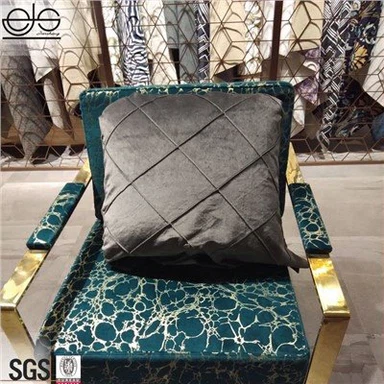
Because a single furniture collection may combine a chenille fabric seat, a suede fabric arm, a quilting fabric throw and a printed fabric cushion, buyers increasingly favour a one-stop home textile fabric manufacturer that can control shade across constructions and ship a consolidated order.
Performance specifications that belong in every tech pack
A technically complete home textile fabric specification contains at least ten measurable fields. Naming the test method matters as much as naming the target value, because the same property measured under ISO and ASTM conditions can produce different numbers.
|
Property |
Why it matters |
Typical method |
Indicative target for contract upholstery |
|
Abrasion resistance |
Predicts wear-through on seats and arms |
ISO 12947-2 (Martindale) / ASTM D4157 (Wyzenbeek) |
25,000–40,000 rubs for residential heavy use; 40,000+ for contract |
|
Pilling and fuzzing |
Controls surface appearance after friction |
ISO 12945-2 / ASTM D3512 |
Grade 4 or better at agreed cycle count |
|
Seam slippage |
Prevents open seams under load |
ISO 13936-2 / ASTM D434 |
Defined load and maximum opening in mm |
|
Tear and tensile strength |
Needed for taut upholstery and stapling |
ISO 13937-2 / ASTM D2261 |
Agreed minimum in warp and weft |
|
Colour fastness to rubbing |
Protects against transfer on light-colour schemes |
ISO 105-X12 / AATCC 8 |
Dry 4+, wet 3–4 or better |
|
Colour fastness to light |
Critical for sunlit rooms and retail display |
ISO 105-B02 / AATCC 16 |
Grade 4+ on blue wool scale |
|
Dimensional stability |
Prevents distortion after cleaning |
ISO 6330 / AATCC 135 |
Within 2–3% warp and weft |
|
Flame retardancy |
Mandatory in many contract markets |
BS 5852, EN 1021-1/2, CAL TB 117-2013, NFPA 260 |
Pass against the named standard for the destination |
|
Weight and width |
Controls costing, yield and cut planning |
ISO 3801 / ISO 22198 |
gsm ±5%; stated cuttable width |
|
Surface finish durability |
Relevant to suede, crushed, embossed and bronzing effects |
Agreed rub, flex or wash cycle |
No unacceptable loss of effect after the agreed cycle |
Figures above are industry-typical reference ranges, not product claims; the applicable target depends on the end use and on the regulations of the destination market. A buyer should always require a current test report naming the exact article, colour and production lot.
Two specification pitfalls recur. First, buyers request "contract grade" without naming a test method or a value, which makes quotes non-comparable. Second, buyers approve a shade on a small lab dip and later discover that pile direction on chenille fabric or the raised grain on embossed fabric changes apparent colour under showroom lighting. Shade approval should always be performed on the production-quality substrate, viewed in both flat and draped positions, under at least two light sources.
Six constructions compared for soft furnishing programmes
The following constructions account for most wholesale home textile fabric demand. Each solves a different combination of cost, durability, texture and design flexibility.
|
Fabric |
Structure and hand feel |
Strengths |
Watch-outs |
Typical end use |
|
Chenille Fabric |
Cut-pile chenille yarns, dense and velvety |
Soft hand, good light absorption, rich plain colour, strong drape |
Pile direction, crushing in high-contact zones, higher weight and freight |
Sofa bodies, heavy curtains, cushions, throws |
|
Suede Fabric |
Woven or knitted microfibre with a napped suede-like face |
Consistent surface, good abrasion, easy to coordinate, printable |
Nap direction, water marking, needs agreed cleaning code |
Upholstery, cushion covers, headboards, wall panels |
|
Quilting Fabric |
Face cloth plus wadding plus backing, stitched in a pattern |
Loft, warmth, dimensional texture, one-step conversion |
Stitch tension, wadding migration, pattern repeat control |
Bedspreads, mattress toppers, jackets for soft goods |
|
Ultrasound Fabric |
Thermoplastic layers fused by ultrasonic bonding, no thread |
Clean relief pattern, no needle holes, low lint, fast production |
Requires thermoplastic content, bond strength and hand feel must be tested |
Bedcovers, cushion fronts, decorative panels, protective covers |
|
Crushed Fabric |
Pile intentionally flattened in irregular directions for a crushed velvet look |
High visual depth, strong light play, premium appearance |
Crush pattern is never uniform; requires agreed tolerance sample |
Accent cushions, statement upholstery, decorative drapery |
|
Embossed Fabric |
Heat and pressure create a raised or recessed pattern |
Adds texture at lower cost than jacquard, works on suede and plain bases |
Relief may relax after washing or compression; test durability |
Upholstery panels, headboards, cushion fronts, packaging-visible textiles |
Jacquard fabric, plain fabric, linen fabric and printed fabric complete the palette. Jacquard fabric gives structural pattern with high durability for upholstery; plain fabric is the economical base for coating, printing and embossing; linen fabric and linen-look cloth serve natural and coastal interiors; printed fabric carries seasonal graphics and coordinate stories. A well-built collection usually pairs one durable plain or jacquard body cloth with one textured accent - chenille fabric, crushed fabric or embossed fabric - and one patterned coordinate in printed fabric.
Matching fabric to end use
- Fixed upholstery on sofas and armchairs. Abrasion, seam slippage and tear strength dominate. Chenille fabric, suede fabric and jacquard fabric are the usual candidates. For high-turnover contract seating, request a bonded or back-coated option where appropriate and confirm the flame-retardant route, because a back coating can change both hand feel and breathability.
- Cushions, throws and decorative layering. Here appearance and hand feel dominate, and mechanical demands are lower. Crushed fabric, embossed fabric, embroidery fabric, bronzing fabric and printed fabric are common. Because these items are often photographed for e-commerce, colour consistency between the cushion face and the upholstery body becomes a commercial issue: agree a single master shade standard across constructions.
- Bedding, bedspreads and mattress covers. Quilting fabric and ultrasound fabric lead, with plain fabric or printed fabric as the face layer. Specify wadding weight, bond or stitch pattern, finished width, wash cycle performance and shrinkage after the first wash. For mattress and topper applications, also check noise, breathability and whether the bonded layers remain flexible after repeated laundering.
- Headboards, wall panels and acoustic soft trim. Dimensional stability, light fastness and a consistent vertical appearance matter more than abrasion. Embossed fabric, suede fabric and linen fabric are frequently used, often laminated to a board. Confirm compatibility with the adhesive or lamination process, since heat and solvent can alter a napped or embossed surface.
- Hospitality and contract fit-out. Flame retardancy, cleaning codes, stain resistance and long-term shade availability across phased refurbishments become decisive. Ask for a written policy on dye-lot reservation and on the shelf life of a flame-retardant finish.
A useful decision rule is to rank the three priorities for each SKU - durability, appearance or cost - and let the lowest-ranked one absorb the compromise. Trying to maximise all three in one article usually leads to an over-specified, over-priced fabric.
Custom development, OEM and private-label programmes
Most wholesale home textile fabric programmes are not bought off a stock list. They are developed. A typical development brief for a private-label sofa collection includes a target end use, a reference swatch or image, the required performance values, the colour standard, the finished width, the target price band, the forecast annual volume and the destination market's regulatory requirements.
From that brief, a home textile fabric manufacturer can work in several modes. Colourway development keeps an existing construction and changes shade, which is the fastest and lowest-risk route. Construction adaptation changes yarn, density, weight or width to hit a price or performance target. Full custom development designs a new jacquard fabric pattern, a new embossing roller, a new quilting stitch layout or a new ultrasonic bond pattern. OEM and ODM supply adds buyer-specific labelling, packing, roll marking and documentation.
Zhejiang Jiersheng Textile Technology Co., Ltd. develops and supplies curtain fabric and home textile fabric for overseas B2B programmes, including chenille fabric, suede fabric, quilting fabric, ultrasound fabric, crushed fabric, embossed fabric, embroidery fabric, bronzing fabric, jacquard fabric, linen fabric, plain fabric and printed fabric. Buyers can approach jestextile.com with a reference swatch, a tech pack or a target end use, and agree construction, sampling and testing before any bulk commitment. Consolidating a coordinated collection through a single China home textile fabric supplier reduces shade-matching risk across fabric types and simplifies inspection and shipping.
Sampling discipline mirrors that of any technical textile: feasibility confirmation, lab dip or strike-off, production-equivalent handloom or metre sample, tested approval sample, then pre-production and pre-shipment inspection. For crushed fabric and embossed fabric, the approval sample must explicitly define the acceptable range of surface variation, because the effect is inherently non-uniform. For quilting fabric and ultrasound fabric, the approval sample should include a cross-section or a stated wadding weight, since visible pattern alone does not define the product.
Costing, MOQ and commercial terms
Home textile fabric cost is a function of fibre, yarn, construction complexity, finishing passes, width, order volume per colour, testing and packaging. Chenille fabric uses more yarn and weighs more per square metre, so freight per square metre is higher. Quilting fabric and ultrasound fabric add a wadding layer and a conversion pass. Embossed fabric and bronzing fabric add tooling or setup. Printed fabric pricing depends heavily on the number of colours, the printing method and the length of the run.
Request quotations showing price per metre together with gsm, cuttable width and roll length, then normalise everything to a price per square metre plus landed freight. Ask for the MOQ per colourway, the surcharge for quantities below MOQ, and the price breaks at defined volume tiers. For a multi-article collection, negotiate a programme-level MOQ rather than treating each construction independently.
Lead times should be itemised into development, greige preparation, dyeing or printing, finishing and bonding, testing, inspection and packing. Third-party laboratory testing is often the least predictable block, so build it into the schedule rather than after it. On commercial terms, fix the Incoterm, payment schedule, inspection acceptance window, packing specification, roll identification and the documents required for customs - typically a commercial invoice, packing list, bill of lading, certificate of origin and any compliance declarations agreed at the quotation stage.
Compliance deserves early attention. Depending on the destination, buyers may request OEKO-TEX Standard 100, REACH SVHC declarations, azo-dye and formaldehyde statements, flame-retardancy certificates with validity dates, and care-label or composition drafts. Request these at enquiry stage and verify that the report corresponds to the article and lot being shipped, because a topical finish may affect shade, hand feel and lead time.
Frequently asked questions
What is the difference between upholstery fabric and ordinary home textile fabric?
Upholstery fabric is a subset of home textile fabric qualified for mechanical stress: it is tested for abrasion, seam slippage, tear strength and often flame retardancy, and is usually heavier, tighter in construction and sometimes back-coated. Ordinary decorative home textile fabric - a printed fabric cushion cover or a lightweight linen fabric throw - prioritises drape, appearance and washability. A buyer should never substitute one for the other without re-running the performance tests for the intended end use.
Which fabric is best for high-traffic sofa upholstery?
Dense chenille fabric, microfibre suede fabric and tightly woven jacquard fabric are the most common choices, provided they meet the abrasion and seam-slippage values set for the project. Ask for a Martindale or Wyzenbeek result from a production-equivalent sample, a pilling grade, and confirmation of pile or nap direction for cutting. For contract seating, also confirm the applicable flame-retardant standard and whether a back coating is required, since it changes hand feel and breathability.
What is ultrasound fabric and when should it be used?
Ultrasound fabric is a composite in which thermoplastic layers are bonded by high-frequency ultrasonic vibration instead of stitching, producing a patterned, quilt-like relief without needle holes or thread. It is used for bedspreads, cushion fronts, mattress covers, decorative panels and protective soft goods where a clean surface, low lint and fast conversion are valuable. Specify the face fabric, wadding or film, bond pattern, bond strength, finished width and wash durability, and check that the thermoplastic content is compatible with the intended end use.
Can quilting fabric and ultrasound fabric be customised with our own pattern?
Yes. Quilting fabric patterns are defined by the stitch layout, thread colour and wadding weight; ultrasound fabric patterns are defined by the bonding roller or tooling. Both can be developed to a buyer's design, with the usual caveat that new tooling carries a setup cost and a minimum run. Provide a vector artwork, the repeat dimensions, the base cloth specification and the target end use, then approve a production-equivalent sample before placing a bulk order.
How can a buyer control shade consistency across chenille, suede and printed fabrics in one collection?
Use one master physical standard, one agreed light source, and a single approval authority. Pile and nap direction change apparent colour on chenille fabric and suede fabric, so evaluate all articles in both flat and assembled positions under D65 and a secondary retail light source. Approve production-quality samples rather than paper lab dips, and require the supplier to retain a sealed, signed master sample for each article. Consolidating the collection with one home textile fabric supplier such as JES Textile at jestextile.com makes cross-construction shade control considerably easier.
What are the most common defects found in bulk home textile fabric inspection?
The recurring issues are shade variation between rolls, incorrect cuttable width, gsm outside tolerance, pile or nap direction inconsistency, pilling after rub testing, crushed or flattened relief on embossed fabric, uneven bronzing transfer, wadding migration in quilting fabric, weak bond strength in ultrasound fabric, and pattern repeat mismatch in jacquard fabric or printed fabric. A pre-shipment inspection that samples across rolls and across the full width, with a written shade-banding record, catches most of them before loading.
Key takeaways
- Home textile fabric selection is a performance decision first: name test methods and target values for abrasion, pilling, seam slippage, fastness, stability and flame retardancy.
- Chenille fabric, suede fabric and jacquard fabric suit high-wear upholstery; quilting fabric and ultrasound fabric suit layered bedding; crushed fabric and embossed fabric suit decorative accents; plain fabric, linen fabric and printed fabric provide bases and coordinates.
- For crushed fabric and embossed fabric, define an acceptable surface-variation range in the approval sample, because the effect is intentionally irregular.
- Normalise all quotations to price per square metre including freight, and itemise development, production, testing and inspection lead times separately.
- Request compliance documentation at the quotation stage and verify that reports name the shipped article and lot.
Importers, furniture manufacturers and private-label brands building a coordinated programme across chenille fabric, suede fabric, quilting fabric, ultrasound fabric, crushed fabric, embossed fabric, jacquard fabric, plain fabric, linen fabric and printed fabric can contact Zhejiang Jiersheng Textile Technology Co., Ltd. through jestextile.com to discuss specifications, swatch development, sampling and wholesale home textile fabric supply.